It is a truth universally acknowledged that if you leave a classic Marvel intellectual property unattended in a room for long enough, Nicolas Cage will eventually enter, pick it up, and imbue it with a level of frantic, twitchy energy that defies both the laws of physics and traditional acting methods.
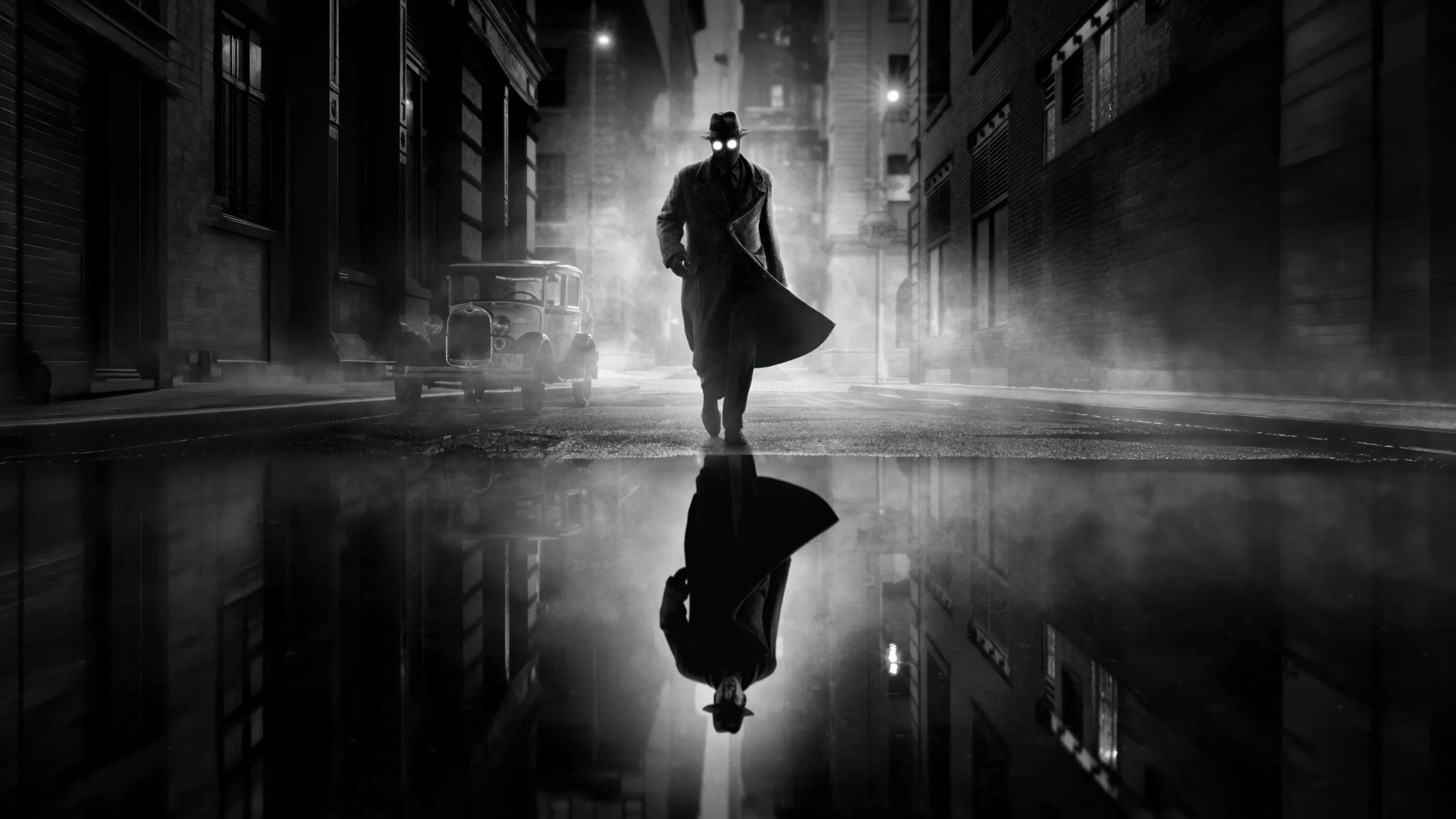
So it goes with the premiere episode of Prime Video’s Spider-Noir, titled “Step Into My Office.” Based on the alternate-universe Marvel Comics character and spun out from Cage’s universally beloved voice work in Into the Spider-Verse, this live-action series answers the burning question: “What if Spider-Man was a deeply depressed, chain-smoking 1930s gumshoe who hated his life and needed to pay his telephone bill?”
The result is a magnificent, artfully bruised period piece that blends traditional film noir tropes with body horror, superhero deconstruction, and just enough hardboiled cynicism to drown a standard superhero flick in a puddle of rainy New York slush.
The Setup: Peter Parker Who? Meet Ben Reilly
Forget the bright, cheery, “friendly neighborhood” optimists of modern cinema. Spider-Noir throws us headfirst into the Great Depression. The sky is grey (or strictly black-and-white, depending on which streaming option you choose—more on that later), the economy is broken, and so is our protagonist.
Our hero doesn’t go by Peter Parker here. He is Ben Reilly, a weathered, cynical private investigator who used to be “The Spider.”
Five years after hanging up his webs following the tragic death of his love, Ruby—who left him with the haunting reminder that “with great power comes great responsibility”—Reilly is completely checked out. He doesn’t want the power, he doesn’t want the responsibility, and he certainly doesn’t want to be a hero. He just wants to squeeze dollars out of rich, suspicious husbands to keep his small-time agency afloat while his secretary, Janet, nags him about the utility bills.
Narrative Flow: From Domestic Spying to Murder Plots
The premiere does an exceptional job of setting up a classic noir narrative cascade, where a seemingly minor case spirals into a web of urban corruption.
When a wealthy client walks into his office asking Ben to track his younger wife, the investigation takes him straight to The Alcove, a smoky, high-class nightclub owned by none other than Silvermane (played with terrifying, cold-blooded precision by Brendan Gleeson). The target of his surveillance turns out to be Cat Hardy (Li Jun Li), and before Ben can blink, he’s caught illicit photos involving the Mayor, stumbled into a dead body that refuses to show burn marks despite an explosion, and run afoul of competing PI Patrick Donegal.
The pacing of the pilot relies heavily on old-school investigative legwork, punctuated by sudden bursts of comic-book violence. When Silvermane brutally interrogates and slits Donegal’s throat at the end of the episode, the stakes are instantly elevated from a standard comic spin-off to a genuine, R-rated crime thriller.
The Style Guide: Chiaroscuro vs. Saturated Hues
Before you even hit play, Amazon forces you to make a choice that will fundamentally alter your viewing experience: “Authentic Black and White” or “True-Hue Full Color.”
The Verdict: Watch it in Black and White.
Director Harry Bradbeer treats the camera like a weapon of shadow. The show utilizes heavy chiaroscuro—the stark contrast between bright light and pitch darkness. Streetlamps cast long, skeletal shadows down New York alleys; Venetian blinds slice lines of light across Cage’s haggard face; smoke from cigarettes curls into the air like miniature ghosts. While the color version boasts heavily saturated, gorgeous period tones, the monochrome filter captures the true, gritty soul of the comic book’s pulp origins.
The Cage Factor: A Different Kind of Superhero
What makes Spider-Noir truly sing is its approach to superpowers. In the modern cinematic landscape, superpowers are clean, flashy, and visually spectacular. Here, they look like a curse.
Nicolas Cage plays Reilly as a naturally twitchy, lightly deranged fighter. When he moves, his body contorts with the unsettling, jerky mechanics of an actual spider. His spider-sense doesn’t just tingle; it looks like a neurological event.
Furthermore, the show introduces fascinating elements of body horror. When Ben investigates the death of James Addison, an individual whose hands literally ignited with energy, we learn his powers were the result of horrific human experimentation and wartime atrocities. This isn’t a fun radioactive spider bite; it’s a terrifying mutation.
Critical Consensus & Sentiment Mapping
Online sentiment for the premiere has been overwhelmingly positive, particularly praising the show’s willingness to abandon standard Marvel Cinematic Universe tropes in favor of a dedicated genre piece.
- The Highs: Reviewers across major platforms are laudatory regarding Nicolas Cage’s ability to balance classic Humphrey Bogart drawl with his trademark eccentricity. Brendan Gleeson’s brief but chilling introduction as Silvermane promises a formidable season antagonist.
- The Lows: Some mainstream viewers have noted that the premiere is “more noir than Spider,” featuring minimal web-slinging or costume action. The plot progression leans heavily on setup, which may test the patience of audiences expecting rapid-fire superhero action.
The Verdict: A Masterful Reimagining
“Step Into My Office” is a triumphant, moody, and deeply stylized premiere. It successfully strips away the glossy, corporate sheen of modern superhero media and replaces it with the smelling salts of classic pulp fiction. By grounding the narrative in the financial desperation of 1930s New York and letting Nicolas Cage play a broken, twitchy gumshoe, the series carves out an identity entirely its own.
It might be a bit slow for viewers looking for a CGI fist-fight, but for anyone who appreciates sharp dialogue, gorgeous cinematography, and a version of Spider-Man who treats his powers like a bad hangover, this is essential viewing.