Forget the breezy, wisecracking archaeology of Brendan Fraser. Forget the “Dark Universe” that died before it could even put on a bandage. Lee Cronin—the man who turned a cheese grater into a nightmare in Evil Dead Rise—has returned to the director’s chair to remind us that being buried alive is actually quite unpleasant.
Released today, April 17, 2026, Lee Cronin’s The Mummy isn’t a remake; it’s a desecration. It takes the dusty bones of the Universal IP, throws them into a blender with high-grade trauma and a gallon of visceral fluids, and asks: “What if the ‘Mummy’ wasn’t a 3,000-year-old priest, but your long-lost daughter coming home with a very bad attitude?”
The Plot: A Family Reunion from Hell
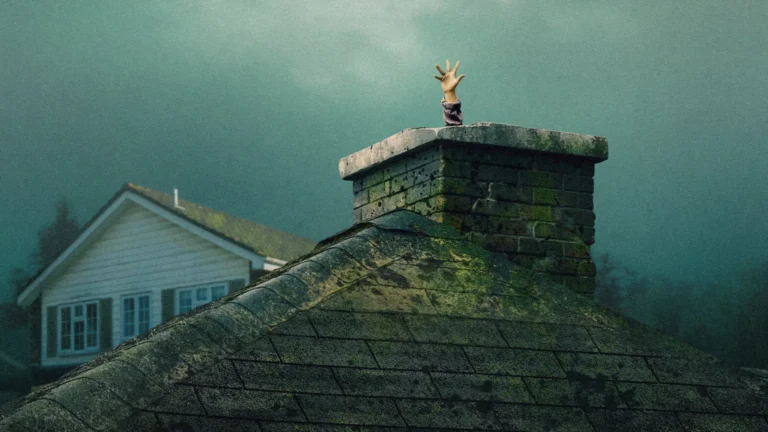
The film centers on Charlie (Jack Reynor) and Larissa (Laia Costa), a journalist couple whose daughter, Katie (Natalie Grace), vanished into the Egyptian desert eight years ago. Just as the grief has fully calcified into a quiet, suburban misery, Katie reappears. She walks out of the desert and right into their living room.
The miracle lasts about ten minutes.
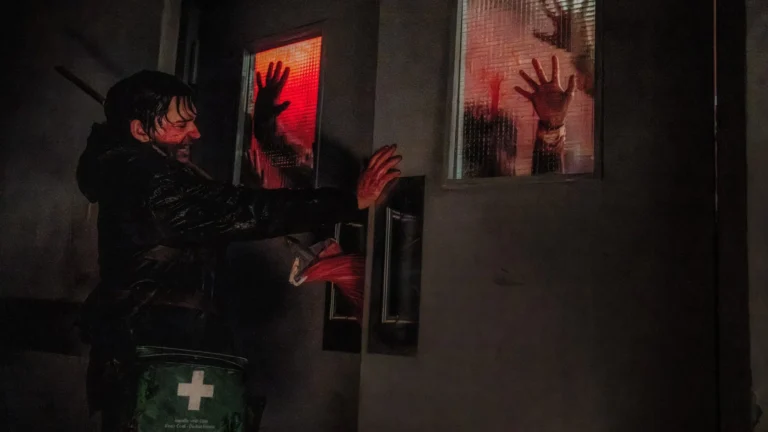
Soon, Katie isn’t just dealing with “re-entry issues.” She’s producing black bile, speaking in voices that would make a sailor blush, and demonstrating a flexibility that defies the laws of skeletal integrity. Cronin swaps the sandstorms for a claustrophobic house of horrors, framing the Mummy not as a lumbering monster in rags, but as an ancient, parasitic entity that has turned a child into a hollowed-out vessel for something truly ancient.
The Style: Guts over Glory
If you’ve seen Cronin’s previous work, you know he doesn’t do “subtle.” This film is wet. It’s crunchy. It’s the kind of movie where you can practically smell the copper of the blood and the dampness of the tomb.
Cronin treats the human body like a piece of overripe fruit. There is a sequence involving a toenail and a bathroom tile that had my screening let out a collective, high-pitched “Nope.” He avoids the CGI spectacle of the 2017 Tom Cruise debacle, opting instead for practical effects that look—and sound—uncomfortably real. The sound design is a character in itself; every bone snap sounds like a dry branch breaking, and every wet squelch is dialed up to eleven.
| Feature | The Mummy (1999) | Lee Cronin’s The Mummy (2026) |
| Vibe | Swashbuckling Adventure | Existential Dread & Body Horror |
| Main Threat | CGI Sandstorm / Imhotep | A Kid you can’t bring yourself to kill |
| Humor | Witty Banter | Pitch-Black, “I-can’t-believe-they-did-that” |
| Gore Level | PG-13 Skeleton Scuffles | Hard R “Call your Therapist” |
The Performances: Trauma in Spades
Jack Reynor and Laia Costa do the heavy lifting of making us care about the “human” side of the horror. Their grief is palpable, which makes the subsequent gore-fest feel earned rather than gratuitous. Costa, in particular, captures the agonizing conflict of a mother who knows her child is gone but can’t stop trying to save the monster wearing her face.
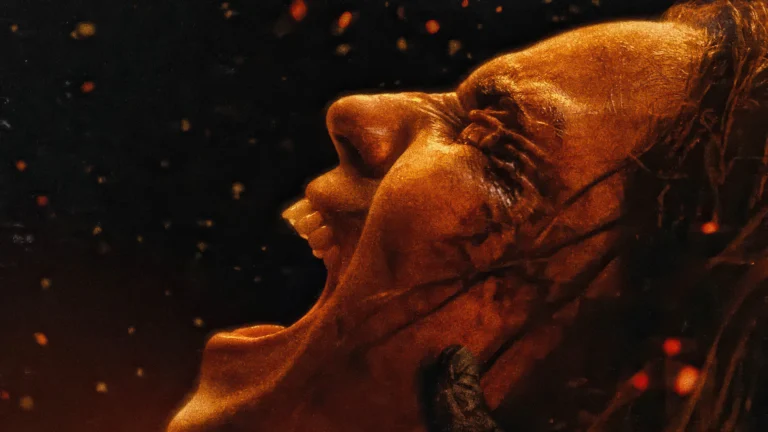
However, the film belongs to Natalie Grace. Playing a “creepy kid” is a horror trope as old as time, but Grace brings a physicality to the role that is genuinely disturbing. She moves with a jerky, unnatural rhythm that suggests her limbs are being operated by a puppeteer who hasn’t quite read the manual on human anatomy.
The Critical Consensus: All Guts, No Map?
While the horror community is currently doing backflips over the sheer audacity of the gore, mainstream critics are a bit more divided.
- The Pros: Everyone agrees the film is a technical marvel. The practical effects, the tension-building, and the subversion of the “Mummy” mythos are refreshing. It feels like a “Midnight Movie” that accidentally got a $60 million budget.
- The Cons: At 133 minutes, it overstays its welcome. The second act gets bogged down in “Possession Movie 101” tropes—jump scares in hallways, flickering lights, and the inevitable “researching the demon” montage. Some have called it “Evil Dead Unwrapped,” arguing that Cronin is essentially remaking his own previous hit but with more sand.
Final Verdict
Lee Cronin’s The Mummy is a mean, nasty, and relentlessly effective horror film. It successfully strips the “Adventure” tag off the franchise and replaces it with “Nightmare.” While it might be a bit too long and perhaps a bit too obsessed with its own unpleasantness, it’s the most original take on a Universal Monster we’ve seen in decades.
It’s not a movie for the faint of heart, or for anyone who’s recently had surgery, or for anyone who likes their daughter to stay dead when she goes missing. But for horror fans? It’s a buffet.
Score: 6.5 / 10
(Reflecting the current Metacritic/Rotten Tomatoes average of “polarizing but technically impressive.”)
Warning: Do not bring popcorn. You won’t want to be eating during the “Sarcophagus extraction” scene. Trust me.