If there is one universal truth in the realm of horror movies, it’s that you should never trust a parent who smiles just a little too widely. If that parent also happens to be played by Antony Starr—bringing the exact same vein-popping, sociopathic energy he uses to play Homelander in The Boys—you shouldn’t just distrust them. You should sprint out of the house, jump into the nearest river, and swim until you hit another continent.
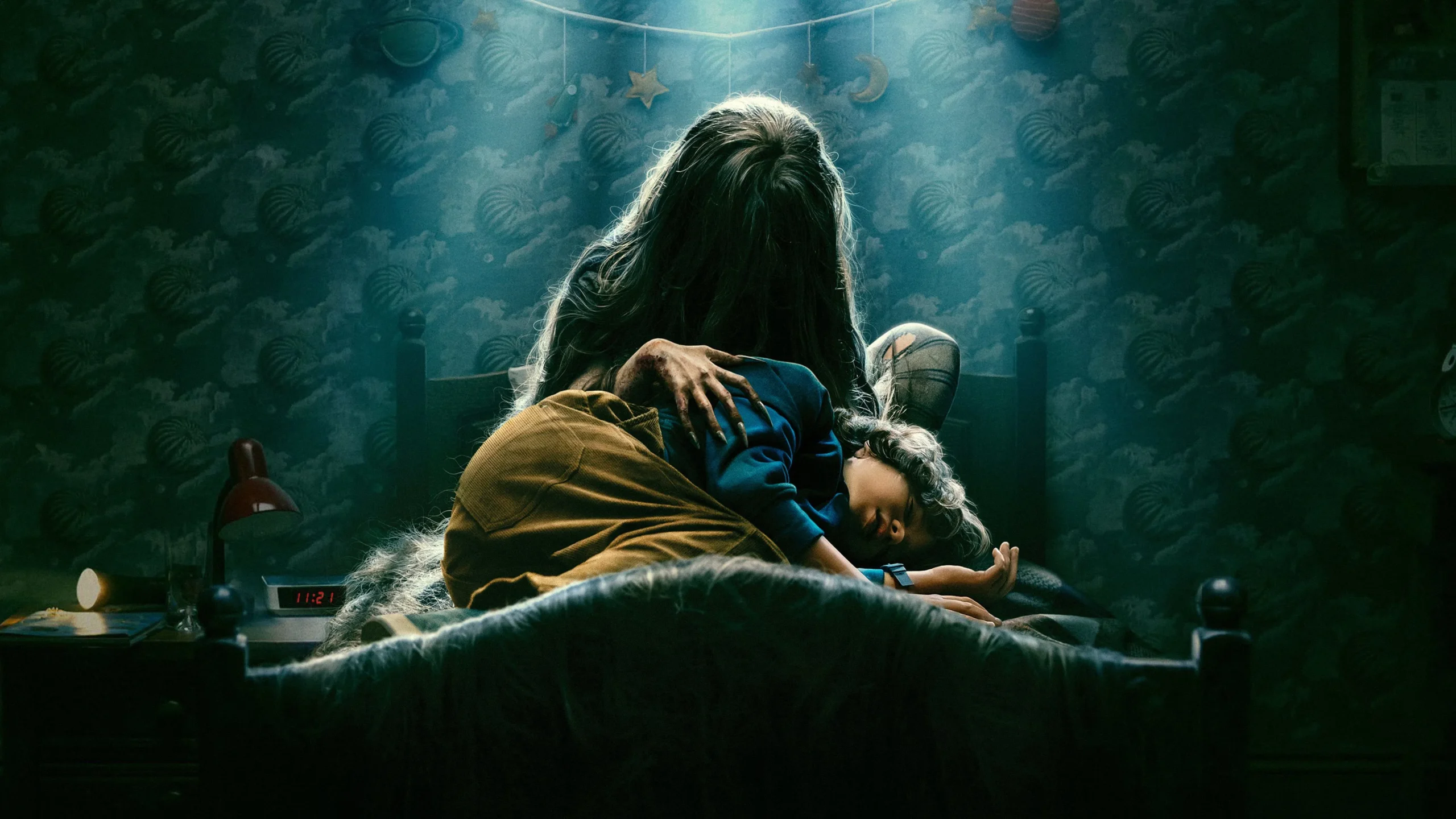
Directed by Samuel Bodin (the mastermind behind Netflix’s criminally underrated French horror series Marianne) and written by Chris Thomas Devlin, Cobweb arrived in the summer of 2023 with a bit of a marketing whimper. It was dumped into cinemas right alongside the monumental box-office juggernaut that was Barbenheimer, which is the theatrical equivalent of sending a tricycle into a monster truck rally.
Yet, since its migration to streaming platforms, this bizarre, dark fairy tale has slowly built a passionate following. It is a film that starts out looking like a classic, prestige slow-burn about childhood trauma and then, around the one-hour mark, downs a double shot of espresso, rips off its own face, and turns into a gloriously unhinged monster mash.
Let’s untangle this web and see why it deserves a spot on your dark-evening watchlist.
The Plot: Tap, Tap, Tap Goes the Wall
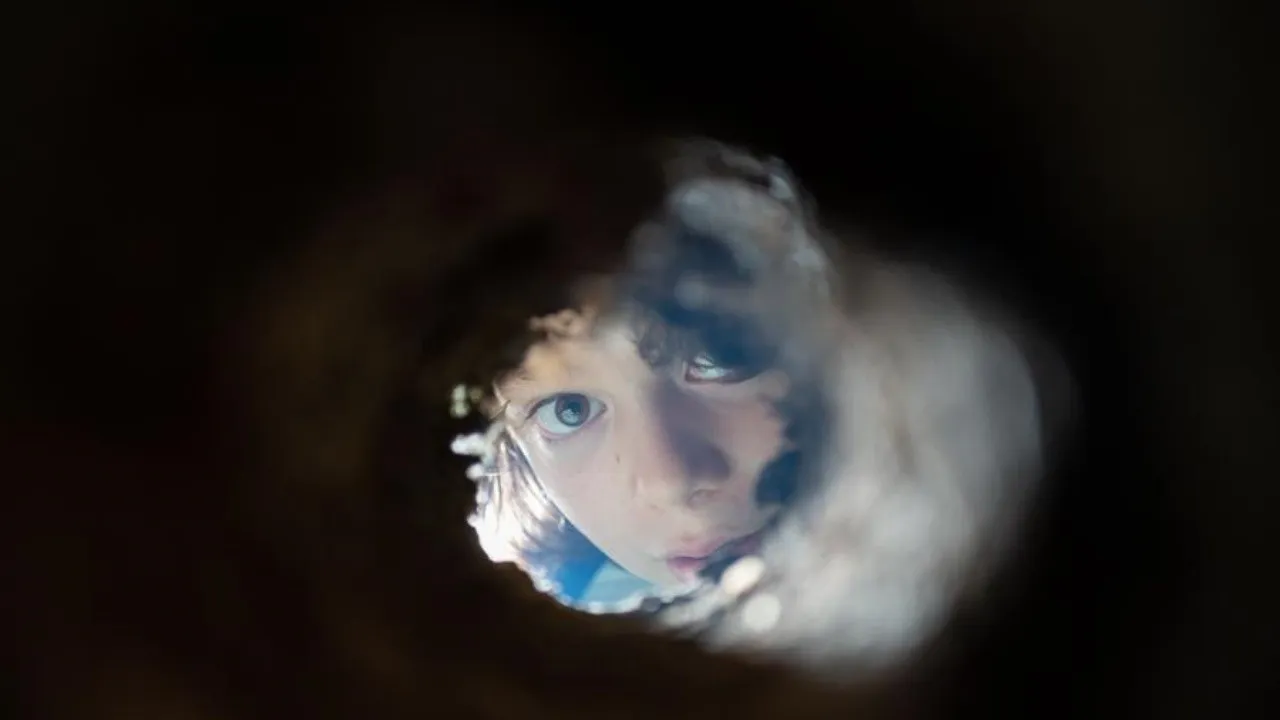
The story centers on Peter (Woody Norman), an eight-year-old lad who is having a thoroughly miserable existence. He’s bullied mercilessly at school, he has no friends, and his bedroom looks like it was designed by a Victorian funeral director. To make matters worse, Halloween is just around the corner, and his parents have strictly forbidden him from going trick-or-treating because of a vague, ominous story about a local girl who went missing in their neighborhood years ago.
But Peter’s real problems are closer to home. Specifically, inside his bedroom wall.
Every night, he hears a rhythmic tap-tap-tap, followed by a raspy, disembodied female voice that introduces herself as “Sarah.” Initially terrified, Peter eventually forms a bizarre, late-night friendship with the voice. Sarah claims she is his sister, hidden away by his tyrannical parents because she was “imperfect.” She starts planting seeds of doubt in Peter’s mind, whispering that his mother and father are actually monsters who mean to do him harm.
Are the parents evil? Is Peter losing his mind due to extreme isolation? Or is the entity in the wall a master manipulator looking for a way out?
Enter Miss Devine (Cleopatra Coleman), Peter’s deeply concerned substitute teacher. She notices Peter drawing incredibly disturbing pictures in class—think less “sunshine and rainbows” and more “screaming stick figures trapped in a void of black crayon”—and decides to do some home visits. What she finds is a household dripping with passive-aggressive hostility.
The Anatomy of a Superficially Perfect Nightmare
For the first two-thirds of its runtime, Cobweb operates with the precise, gothic geometry of a Grimm brothers’ fable. Director Samuel Bodin handles the atmosphere with an aggressive amount of style.
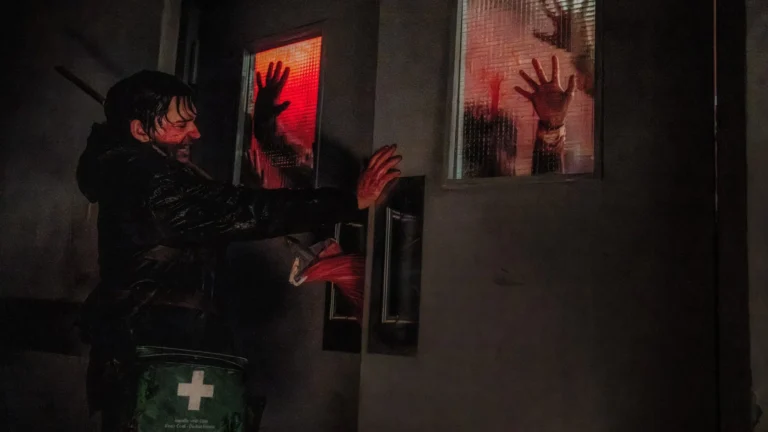
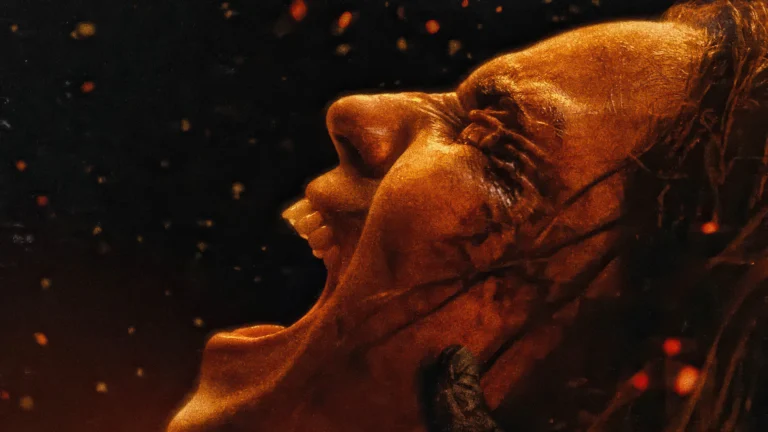
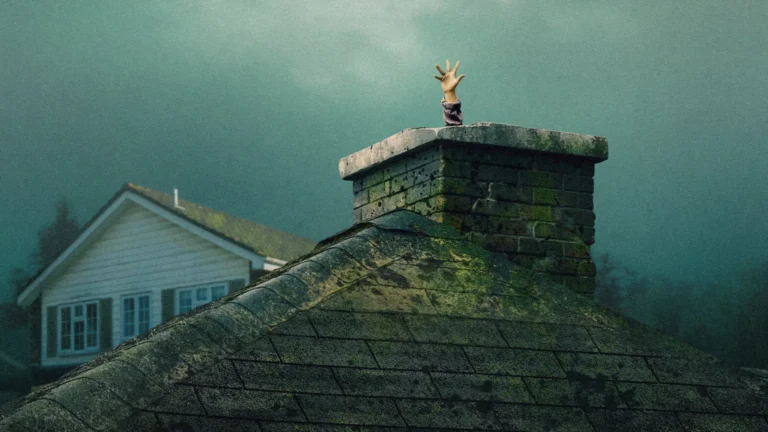
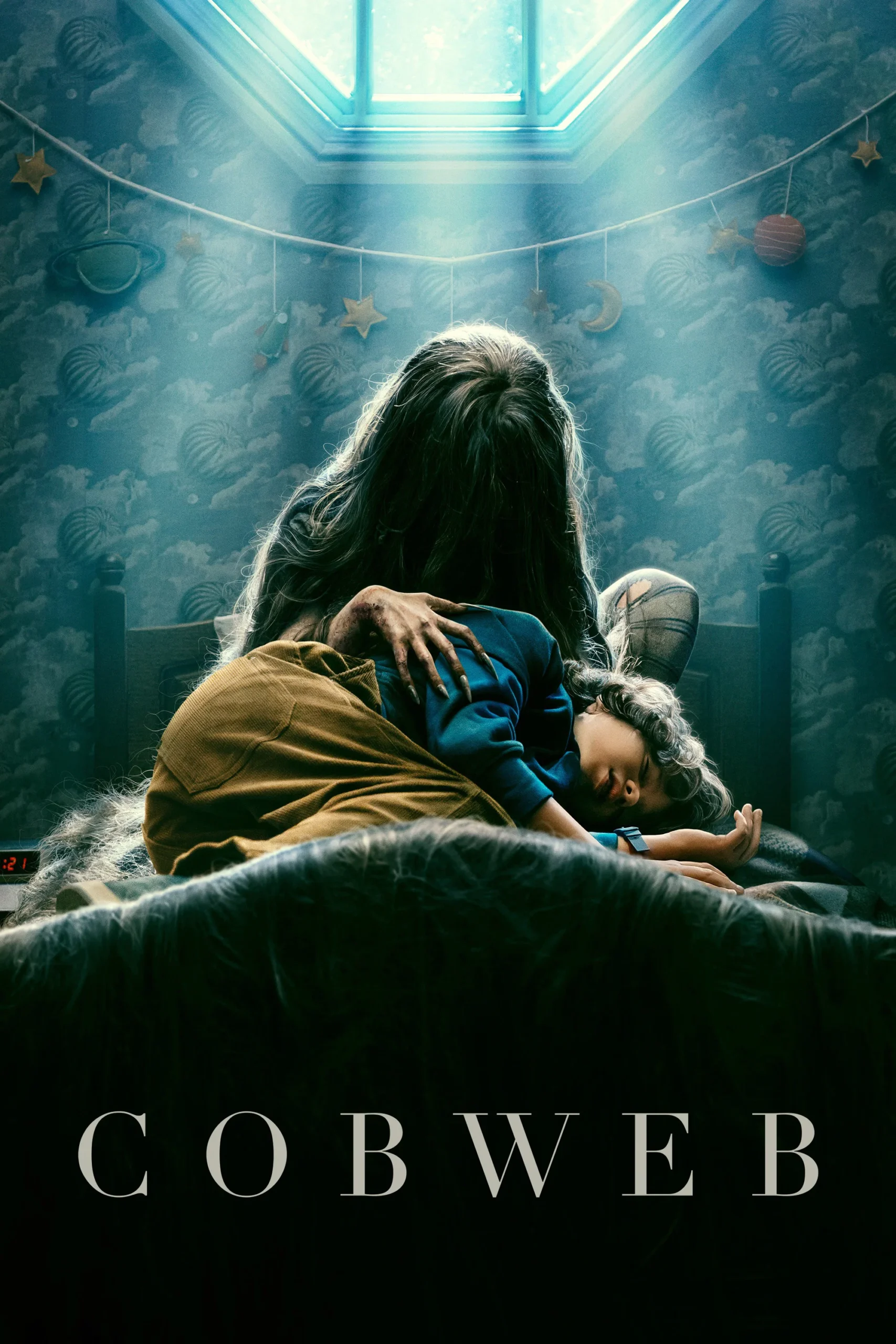
The family home is practically a character itself. It’s an oversized, dimly lit suburban house surrounded by a rotting, overgrown pumpkin patch. Inside, the walls are covered in peeling, sickly blue wallpaper, and every floorboard groans like a dying soul. Bodin uses a hyper-stylized palette; the blacks are incredibly deep, and the artificial light makes the entire film look like it takes place inside a perpetual, foggy October twilight. It feels less like modern America and more like an anxieties-induced dreamscape.
Then we have the parents. Lizzy Caplan (Mean Girls, Castle Rock) plays Carol, a mother whose maternal instinct feels like it was programmed by a broken AI. She shifts from baking cookies to snapping at her son with a terrifying, whiplash-inducing volatility.
Opposite her is Antony Starr as Carol’s husband, Mark. Starr is a master of using his eyes to convey absolute, unadulterated menace while maintaining a calm exterior. There is a scene where Mark takes Peter down to the basement to “teach him a lesson” about boundaries, and the tension is so thick you could cut it with a rusty carving knife. The brilliance of their performances lies in the ambiguity: for a long time, you can’t tell if they are supernatural ghouls, simple child abusers, or just profoundly damaged individuals trying to manage an impossible situation.
The Great Genre Shift: When the Wheels Come Off
If you were to stop Cobweb at the 60-minute mark, you would think you were watching a respectable, somber psychological thriller along the lines of The Babadook or Under the Shadow. It’s a metaphorical exploration of domestic abuse, isolation, and parental gaslighting.
And then, the final act happens.
Without spoiling the specific mechanics of the twist, Cobweb completely throws away the rulebook of prestige horror and dives headfirst into full-throttle, 1980s-style creature-feature absurdity. The slow burn ends, the gas tank is opened, and a match is thrown right into the middle of it.
For some viewers, this massive tonal shift is where the movie falls apart. It trade-offs psychological nuance for blood-splattered chaos. But for genre fans who appreciate a film that isn’t afraid to get silly, the final 20 minutes are an absolute riot. The movie unleashes a level of kinetic, chaotic violence that features some of the most creative and brutal kills seen in mainstream horror in recent years. It stops trying to make you think and focuses entirely on making you cheer, gasp, and yell at the screen.
Horror Metric Breakdown
To see how Cobweb stacks up against the competition, let’s dissect its core strengths and weaknesses.
| Horror Element | Rating | Critical Commentary |
| Atmosphere & Cinematography | 9.0 / 10 | Genuinely spectacular. The pumpkin patch, the lighting, and the claustrophobic camera work create a gorgeous, Halloween-infused dream. |
| Acting (The Parents) | 8.5 / 10 | Antony Starr and Lizzy Caplan steal every single scene they are in. They are deeply unsettling even when they are just standing still. |
| Pacing & Structure | 6.5 / 10 | The transition between the slow-burn psychological first half and the chaotic monster-movie finale is incredibly jarring. |
| The Logic Factor | 5.0 / 10 | The film requires a massive suspension of disbelief in the final act. Characters make classic, silly horror-movie choices, and the physics of the house become highly questionable. |
What the Internet Thinks: The Critical Consensus
Online reception for Cobweb reflects a fascinating split between traditional critics and die-hard horror enthusiasts.
On review aggregators like Rotten Tomatoes, the film holds a fresh 59% rating from critics, but boasts a much higher 71% audience score.
- The Critical View: Many mainstream reviewers felt that the script was too derivative of other, better-known horror films (drawing heavy comparisons to Coraline, The People Under the Stairs, and Malignant). They argued that the final act completely unraveled the careful tension built up during the introduction.
- The Fan View: Conversely, horror forums, Letterboxd reviews, and genre blogs have embraced the movie as a minor holiday classic. Fans celebrate the film’s refusal to take itself too seriously at the end, praising its practical effects, its unapologetic mean streak, and its dense, autumnal atmosphere. It is widely agreed that while it may not be a perfect movie, it is a highly entertaining one for an October night in a dark room.
The Final Verdict
Cobweb is a film of two halves, held together by spectacular acting and a director who knows exactly how to frame a scare. It doesn’t quite stick the landing with total grace, but the journey down the rabbit hole is so visually striking and beautifully performed that it’s impossible not to recommend it to anyone who loves a bit of campy, creepy cinema.
It is a twisted bedtime story that reminds us all of the ultimate childhood fear: that the people who are supposed to protect us from the monsters under the bed might actually be the ones who put them there in the first place.
Final Score
7/10
The Bottom Line: A gorgeously shot, wonderfully acted piece of seasonal horror that swaps its thinking cap for a chainsaw in the final act. Watch it for Antony Starr’s weaponized dad energy and a visual design that feels like a warm hug from a skeleton.