Forty-five years after Sam Raimi first unleashed a trio of horny, flesh-possessing demons into a drafty Tennessee cabin, the Evil Dead franchise proves once again that it is utterly impossible to kill. Like a stubborn Deadite that refuses to stay buried beneath the floorboards, the series has clawed its way back into theaters with its latest cinematic bloodbath: Evil Dead Burn.
Stepping into the blood-soaked director’s chair is French filmmaker Sébastien Vaniček, fresh off his skin-crawling spider horror Infested. Vaniček brings a heavy dose of ruthless, mean-spirited European intensity to the table, delivering what is easily the most uncompromised, vicious, and downright exhausting entry in the franchise’s history. If you thought the cheese-grater scene in Evil Dead Rise was uncomfortable, Burn is here to make you completely re-evaluate your threshold for everyday household objects and kinetic violence. It’s witty in its sheer audacity, but make no mistake: this movie wants to punish you.

The Setup: A Family Reunion From Hell
Every Evil Dead movie requires a sacrificial lamb, an isolated geographic trap, and someone dumb enough to read aloud from a book bound in human skin. This time, we trade the standard “college students on vacation” trope for an awkward, emotionally fraught family gathering that makes your last Thanksgiving look like a day at Disney World.
The story follows Alice (played with remarkable steel and grit by Souheila Yacoub), a woman mourning the sudden, fiery death of her volatile husband, William. Hoping to find solace—or at least get through the legalities of grief—Alice travels with her brother-in-law Joseph (Wednesday’s Hunter Doohan) to a remote forest holiday home to hold a quiet wake with William’s intensely dysfunctional, passive-aggressive family.
Naturally, because no one in horror history has ever looked at a creepy basement or an old attic and thought, “Let’s just stay in the living room and watch television,” Joseph uncovers the franchise’s favorite literary nightmare: the Necronomicon Ex-Mortis. Alongside the Book of the Dead, he plays a series of archaic audio recordings. You know the drill: ancient words are muttered, a demonic presence is awoken in the woods, and the psychological trauma of a fractured family rapidly morphs into literal, skin-peeling body horror.
The Global Temperature: Critical Consensus
To understand how Evil Dead Burn is landing with audiences and critics across the major tracking platforms, we have to look at the numbers. It’s polarizing, brutal, and definitely not for the faint of heart, but the horror community is largely showing up for the carnage.
Aggregated Critic Metrics
- Rotten Tomatoes: 74% (Fresh)
- The Verdict: Critics praise Vaniček’s technical direction and inventive, brutal set pieces, though some note the extreme, relentless cruelty borders on hollow shock value.
- IMDb: 7.1 / 10
- The Verdict: Horror purists appreciate the sheer scale of the practical effects and the lack of CGI reliance, while casual viewers find the relentlessly grim tone a bit too exhausting for a Friday night out.
- Screen Rant: 3.5 / 5
- The Verdict: Celebrated as a distinct, visually striking, and incredibly mean-spirited entry that effectively revives the spirit of the “New French Extremity” subgenre within an American studio IP.
The Directorial Vision: French Extremity Meets American Camp
What makes Evil Dead Burn so fascinating—and inherently polarizing—is Vaniček’s refusal to wink at the camera. If you are walking into the theater hoping for the groovy, chainsaw-revving, one-liner-spouting bravado of Bruce Campbell’s Ash Williams, you are going to leave feeling thoroughly punished. The tongue-in-cheek humor of Army of Darkness or Ash vs Evil Dead has been completely incinerated. In its place is a cold, nihilistic streak heavily influenced by early 2000s French extremity films like Haute Tension and Martyrs.
Vaniček treats possession not as a supernatural quirk or a wacky identity change, but as a deeply painful, agonizing physical destruction. The Deadites here aren’t just mocking their victims with cackling riddles; they are actively trying to inflict the maximum amount of psychological and physical mutilation possible. The director takes a savage, witty joy in turning everyday household objects into weapons of absolute terror.
The Car Sequence: A Masterclass in Carnage
If there is one sequence that will be talked about by horror fans for the rest of the decade, it is the mid-movie set piece involving the family patriarch, Edgar (Erroll Shand), who becomes infected first.
Without spoiling the narrative trajectory, the entire sequence unfolds inside and around a parked car. Vaniček orchestrates a terrifying ballet of violence, utilizing every single component of the vehicle—seatbelts, deployed airbags, the sunroof, the headrest, and even a rogue fountain pen—as instruments of torture. It is phenomenally staged, boasting a level of kinetic, claustrophobic blocking and inventive choreography that reminds you exactly why Sam Raimi hand-picked this director to inherit his sandbox. It’s the kind of scene where you don’t know whether to scream, laugh at the absurdity, or look away entirely.
The Technical Execution: Where the Rot Sets In
While the film excels when it is operating as a pure, adrenaline-fueled engine of violence, it begins to stumble when it tries to slow down and explain itself. The connective tissue between the major action beats is where the cracks in the foundation show.
A Palette of Literal Ash
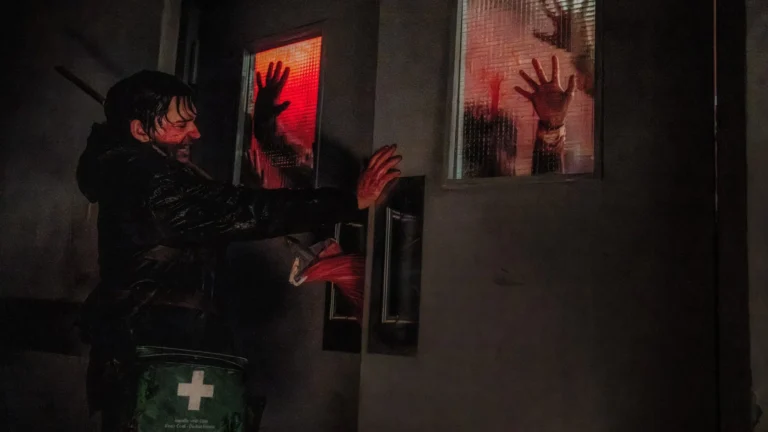
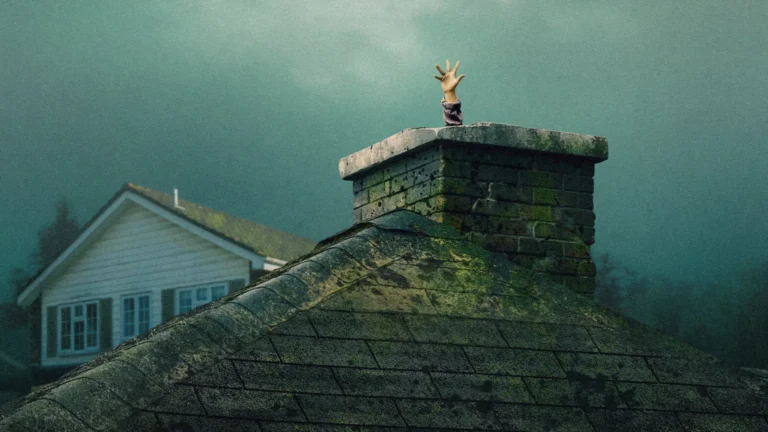
Visually, Vaniček and cinematographer Philip Lozano make an aggressive stylistic choice that doesn’t entirely pay off. The film’s color palette is aggressively washed out, draped entirely in cold, dreary grays, muted blues, and dark blacks. While it successfully mirrors the somber theme of grief and the literal title of Burn, the visual landscape often feels remarkably flat.
When a movie is this dedicated to spilling hundreds of gallons of blood, you generally want that blood to pop onscreen with that classic, vibrant, comic-book red. Instead, the gore is so dark and heavily graded that it occasionally loses its visceral impact, looking more like spilled motor oil than fresh, hot arterial spray.
Editing and Pacing Quirks
The editing by Maxime Caro feels noticeably disjointed during the film’s first act. The movie rushes through its initial setups, chopping between random scenes of violence and an awkward rhythm of character introductions. The score, handled by the musical duo Double Danger, also misses the mark slightly, opting for generic, blaring industrial drones over the classical, shrieking string tension that made the original films’ soundtracks so iconic.
Furthermore, while the film relies heavily on jaw-dropping practical effects for 80% of its runtime, the third act succumbs to some seriously dodgy, overly ambitious digital VFX that temporarily break the immersion of an otherwise highly tactile, grounded horror experience. When the practical effects hit, they hit like a freight train; when the digital effects take over, it feels like a standard Hollywood blockbuster.
Performance Review: Souheila Yacoub Rules the Night
Despite the clunky narrative pacing, the film is completely held together by its lead performance. Souheila Yacoub is an absolute revelation as Alice.
Character Resilience Index
- Alice (Souheila Yacoub): 100% (Unstoppable, blood-drenched, emotionally raw powerhouse)
- Joseph (Hunter Doohan): 50% (Pans panic-stricken through the house, makes questionable choices, but tries his best)
- The In-Laws: 5% (Essentially acting as immediate kindling for the Deadite fire)
Yacoub handles the physical demands of the role with an incredible, muscular intensity, but it’s her emotional performance that anchors the film. Alice isn’t just fighting off demonic zombies; she is a woman fighting to survive an abusive relationship and an enabling, toxic in-law family that would rather turn a blind eye to past sins to preserve their facade of upper-class perfection.
When the family members turn into Deadites, the metaphorical subtext becomes blissfully literal: Alice is quite literally forced to dismember the toxic family she married into. When she finally picks up the franchise’s mandatory heavy machinery to defend herself, it feels earned, cathartic, and completely justified. Hunter Doohan also turns in a solid performance as the naive Joseph, acting as a frantic, emotional counterweight to Yacoub’s hardening survival instincts, even if his character is written to make some bafflingly dim-witted choices to keep the plot moving forward.
The Verdict: For the Deadite Completists
Evil Dead Burn is not the smartest Evil Dead movie. It is certainly not the funniest. But it makes a definitive, iron-clad claim as the absolute meanest entry in the entire catalog.
It is a grueling, unapologetic endurance test designed to bludgeon the viewer into submission. While it lacks the whimsical charm of the original trilogy and occasionally mistakes abject cruelty for genuine creative writing, its technical execution during its peak action set pieces is undeniable. It’s a film made by horror sickos, specifically for horror sickos.
If you have the stomach for it, it provides a thrilling, blood-and-bile-soaked bridge that will easily sustain franchise fans. Just make sure you stay all the way through the credits—the final post-credit stinger tags are a hilarious, wicked treat that perfectly reward the audience for surviving the previous 109 minutes of absolute carnage.
Final Score
7.3 / 10
The Bottom Line: An absolute must-watch for hardcore gorehounds and franchise completists, even if the relentless nihilism and washed-out visuals keep it just a few steps short of true cinematic greatness. Turn the lights off, grab some popcorn, and prepare to cringe.