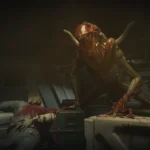
If you’ve ever sat in detention and thought, “I’d literally rather die,” director Corin Hardy (The Nun, The Hallow) has heard your prayer and answered it with a skull-shaped Aztec relic.
Whistle is a film that feels like it was unearthed from a 1998 time capsule, dusted off with a “Gen Z” cloth, and injected with enough practical gore to make Tom Savini weep with joy. It’s a “cursed object” movie that knows it’s a cursed object movie, tipping its hat to Final Destination and A Nightmare on Elm Street while blowing a very loud, very deadly tune of its own.
The Plot: Blow It and… You’re Toast
The story follows Chrysanthemum “Chrys” Willet (Dafne Keen, bringing that trademark Logan intensity), a brooding transfer student with a tragic past and a penchant for oversized hoodies. On her first day at Pellington High, she inherits a locker previously owned by a star athlete who—in a truly “flambéed” opening sequence—spontaneously combusted in the showers.
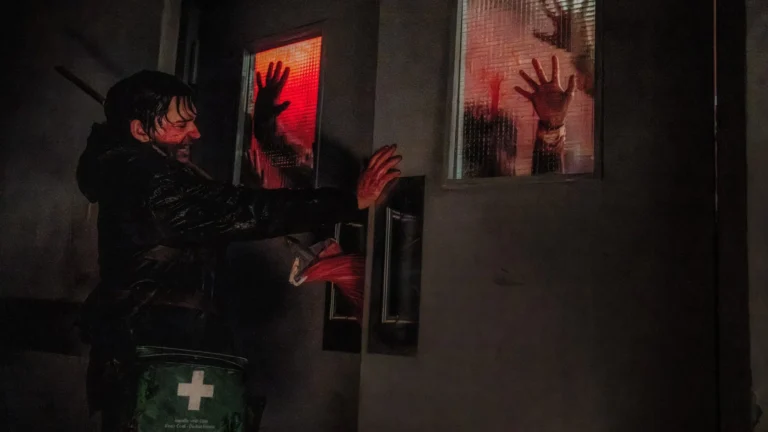
Inside the locker, Chrys finds the titular MacGuffin: an ornate, bone-chilling Aztec death whistle. Naturally, during a Breakfast Club-style detention session presided over by the delightfully jerkish Mr. Craven (Nick Frost), the whistle is blown.
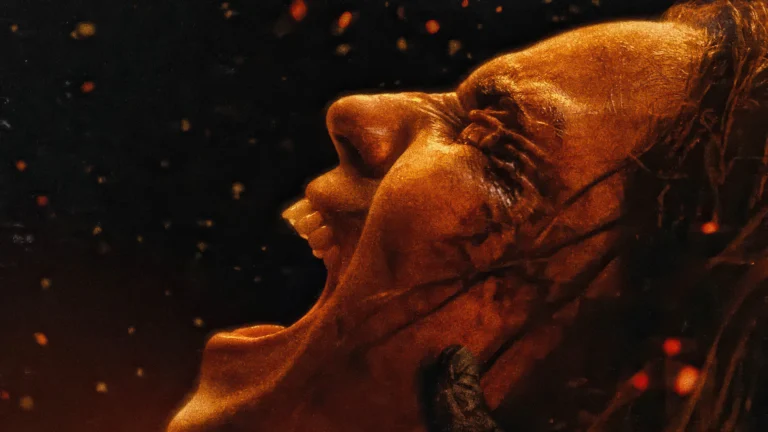
The Hook: In this universe, the whistle doesn’t just summon a ghost; it summons your future death. If you’re fated to die in a car crash at age 80, your 80-year-old, mangled self is coming for you now. It’s a “Fixed Destiny” horror show that asks: If you can’t outrun fate, can you at least outrun your own corpse?
The “Death Do’s and Don’ts” Infographic
To survive a Corin Hardy film, one must understand the rules of the curse. Here’s how the Whistle stack up against the classics:
| Feature | The Ring (2002) | Final Destination (2000) | Whistle (2026) |
| The Catalyst | A VHS Tape (Retro!) | A Vision / “The Plan” | A Badly Timed Flute Solo |
| The Threat | Soggy Well-Girl | Gravity & Rube Goldberg | Your Future Self (with a grudge) |
| Escape Route | Copy the tape | “Cheat” Death | The “Blood Sacrifice” Swap |
| Survival Rate | Low | 0% (eventually) | Depends on your morals |
A Bloody Good Time (Mostly)
The film’s greatest strength is its practical effects. In an era where CGI blood looks like strawberry jam, Hardy uses actual animatronics, contortionists, and enough latex to supply a surgical convention.
- The Standout Kill: A sequence involving a harvest festival hedge maze and a twitchy, wall-crawling elderly version of a cheerleader is arguably the best horror set-piece of 2026 so far.
- The Emotional Core: The chemistry between Dafne Keen and Sophie Nélisse (as the “good girl” Ellie) provides a surprisingly sweet, queer romance that anchors the chaos. It’s rare to find a horror movie that cares as much about a first kiss as it does about a character being ground into “industrial-grade meat-mist.”
The “Cringe” Factor: Where the Script Falters
However, the film isn’t without its “stiff” moments. The script by Owen Egerton is—to put it politely—as subtle as a chainsaw.
- Exposition Dumps: Characters don’t just talk; they narrate their biographies. “Good to see you settle in, cuz! I’ve been in shape since I started working at the steel mill!” is actual dialogue that exists.
- The “Drug-Dealer Pastor”: Percy Hynes White plays a character named Noah who is a youth pastor and a drug dealer. It’s a role so bafflingly “extra” that he feels like he wandered in from a different, weirder movie.
The Critical Pulse: What the Internet is Saying
The reviews are coming in as a “solid B-movie” consensus. It’s being praised for its “gnarly kills” but dragged for its “predictable ending.”
- The “Vibe” Check: Most critics agree it’s a “comfort horror”—the kind of movie you watch on a Friday night with a pizza and the lights off.
- The Consensus: “It’s Talk to Me meets The Breakfast Club, but with 40% more screaming.”
“Whistle doesn’t reinvent the wheel, but it certainly puts enough spikes on it to make the ride uncomfortable in the best way possible.”
Final Verdict
Whistle is a loud, messy, and unashamedly fun slasher. While it trips over its own tropes in the final act (and features a mid-credits scene that practically screams “PLEASE GIVE US A SEQUEL”), it succeeds because it actually likes its characters. You don’t just want to see them die; you want to see them survive their own terrible futures.
Final Score: 5.5 / 10
(Averaged from a 58% Rotten Tomatoes score and a 55 Metacritic rating)