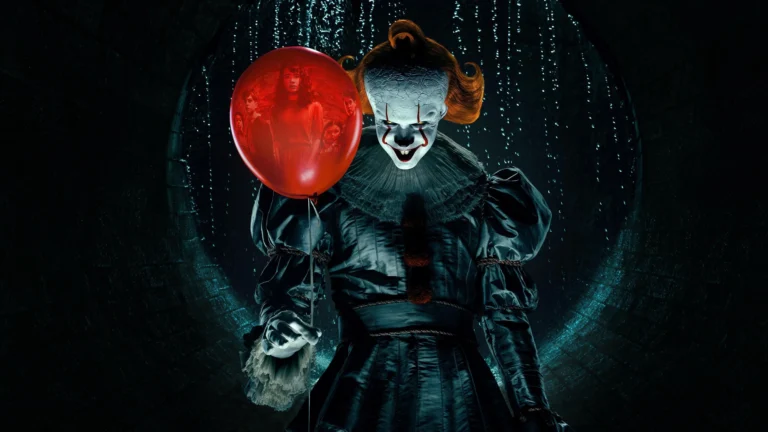
Ah, Derry. That quaint little Maine town where the sewers run red with more than just rust, the clown makeup is always a little too fresh, and the local economy thrives on repressed childhood trauma and suspiciously affordable balloon animals. Stephen King’s It has been terrorizing readers and viewers since 1986, spawning a miniseries that gave us Tim Curry’s nightmare fuel grin, and two films that turned Bill Skarsgård into the creepiest red-nose-wearing entity since Ronald McDonald crashed a funeral. But let’s talk endings—the bitter chocolate in the horror candy bar that either leaves you satisfied or questioning your life choices. It: Chapter Two (2019) wrapped up the adult Losers’ Club saga with a finale that felt like a three-hour fever dream directed by a committee of caffeinated executives.
It had heart, sure, but mostly it had CGI spiders the size of Buicks and emotional beats that landed like wet noodles. Fast-forward to 2025, and HBO’s Welcome to Derry drops its Season 1 finale, “Winter Fire,” like a Molotov cocktail into the franchise’s lap. Spoiler alert: it’s not just better—it’s the upgrade Derry desperately needed, like swapping out Pennywise’s rusty bike for a Tesla with flame decals. He we dissect why this prequel’s send-off eclipses Chapter Two’s bloated balloon bouquet. Buckle up, floaters—it’s gonna be a witty, wise-cracking ride through the Barrens.

First, a quick refresher for the uninitiated or those who’ve wisely repressed their It marathons. It: Chapter Two, directed by Andy Muschietti, picks up 27 years after the kids’ summer of sewer spelunking. The adult Losers—now played by a star-studded cast including Jessica Chastain, James McAvoy, and Bill Hader stealing scenes like a pickpocket at a clown convention—return to Derry to finish off Pennywise once and for all. The ending? It’s a sprawling, ritualistic showdown involving Chinese restaurants, giant Paul Bunyan statues toppling like dominoes, and a finale where the Losers mock the clown into irrelevance.
Sounds epic on paper, right? But in execution, it drags like a silver balloon caught in a nor’easter. Clocking in at nearly three hours, the climax feels less like a crescendo and more like a marathon where everyone’s wearing clown shoes. The emotional core—the Losers confronting their past selves via elaborate memory-lane detours—is noble but numbingly nostalgic. And don’t get me started on the spider transformation: it’s less terrifying than a bad Halloween costume from Party City. Critics called it “overstuffed” (hello, 63% on Rotten Tomatoes), fans grumbled about pacing, and I personally needed therapy after that sewer flood scene. It tried to be everything: horror, drama, bromance, and existential therapy session. Result? A finale that floats away on its own hot air.
Enter Welcome to Derry, the HBO prequel series that smartly sidesteps the Losers’ spotlight to shine on the town’s forgotten underbelly. Set in 1962—the year before the Black Spot massacre that birthed Pennywise’s modern menace—the show follows a ragtag ensemble of Derry residents: the pie-baking matriarchs, the boozy beat cops, and the wide-eyed kids who’ll grow up to spawn our favorite trauma magnets. Showrunners Tommy Brennan and Andy Muschietti (yes, him again, redeemed) weave a tapestry of small-town dread, where the real monster isn’t just the clown but the rot festering in Derry’s soul. Season 1 builds like a snowstorm in the Barrens: slow, insidious, until Episode 8, “Winter Fire,” unleashes a blizzard of revelations that make Chapter Two look like a sunny picnic.
Without spoiling the unspoilable (go watch it, you cowards), the finale traps our protagonists in a fog-shrouded standoff that peels back Pennywise’s layers like an onion from hell. There’s time-bending weirdness, a suicide that hits harder than a silver slug to the dome, and a parting shot involving a certain future Loser’s lineage that had me ugly-crying into my Derry-themed popcorn bucket. It’s taut, clocking in at 55 minutes of pure, pressurized terror—no filler, no fat, just lean, mean myth-making.

So why is “Winter Fire” the superior send-off? Let’s break it down, category by category, with the wit of a Loser cracking wise mid-possession. First up: pacing and structure. Chapter Two’s ending is a labyrinthine mess, bouncing between past and present like a balloon on meth. We get 20-minute detours into childhood flashbacks that rehash beats from the first film, diluting the urgency. It’s like trying to solve a murder mystery while someone keeps pausing to show baby photos. Welcome to Derry, bless its efficient soul, treats time as a weapon, not a crutch.
The finale zips through Derry’s frozen streets with the precision of a ritual dagger. Fog rolls in at minute 10, trapping characters in a spatial-temporal funhouse where past sins collide with present panics. No endless montages—just razor-sharp cuts between a kid’s desperate plea and a parent’s unspoken guilt. It’s structured like King’s own prose: economical yet evocative, building to a climax that explodes in under 30 minutes. By the time the credits roll, you’re not exhausted; you’re exhilarated, pondering existential dread over your third cup of coffee. Chapter Two leaves you bloated; Derry leaves you breathless.
Next, emotional resonance. Ah, the Losers’ Club—bless their scarred hearts. Chapter Two wants us to care about these adults reuniting for one last hurrah, but it fumbles the ball harder than Bill on his stuttery bike. The big moments, like Bev’s water torture or Richie’s closet confession, are undercut by cheeseball dialogue (“We were together then, we’re together now”) that sounds like it was workshopped in a Hallmark factory. It’s heartfelt, sure, but hollow—like hugging a balloon animal. The stakes feel manufactured because we’ve already seen these characters conquer It as kids; the adults just seem like whiny millennials fighting their midlife crises with sewer sludge. Welcome to Derry flips the script by grounding its terror in fresh faces and untapped traumas.
These aren’t battle-hardened heroes; they’re everyday Derryites—bakers, barflies, and button-nosed brats—whose unraveling feels achingly real. The finale’s gut-punch comes from a lineage reveal that ties directly to It‘s canon without cheapening it: imagine learning your family’s curse isn’t just bad luck but a clown-shaped prophecy. It’s layered with King’s signature pathos—the quiet horror of generational sin—delivered via performances that make Chastain’s Bev look like a stiff. Jovan Adepo’s Leroy, a Black veteran grappling with Derry’s casual racism amid otherworldly evil, delivers monologues that sting like silver bullets. And that epilogue? A single, silent shot of a woman in the fog that whispers volumes about cycles unbroken. It’s emotion that lingers like Derry’s eternal autumn, not evaporates like Chapter Two’s confetti.
Visuals and horror chops? Chapter Two goes big or goes home—mostly to the effects house. The finale’s spectacle is a fireworks display of flops: a decapitated statue crashing through a theater (cool in theory, corny in practice), a grotesque lady in the bathroom mirror that’s more The Ring rip-off than original sin, and the aforementioned spider that’s equal parts Arachnophobia and bad acid trip. It’s CGI overload, prioritizing scale over scares, turning Pennywise into a Marvel villain rather than a shape-shifting id. Skarsgård chews scenery admirably, but the design feels cartoonish, like the clown’s diet consists of Red Bull and rejected Pixar pitches.
Welcome to Derry masters the intimate grotesque, proving you don’t need a budget bigger than Maine’s GDP to terrify. “Winter Fire” unfolds in Derry’s wintry whites and grays—a palette of frostbitten fear where Pennywise’s red pom-poms pop like arterial spray. Practical effects reign: a fog that claws at your screen, shadows that slither like veins, and a transformation sequence involving everyday objects (think: a snow shovel meets The Shining) that’s viscerally vile. The horror is psychological first, visceral second—Pennywise doesn’t just kill; he unmakes, dragging victims into personal hells rendered with claustrophobic close-ups. It’s King at his folk-horror best, evoking ‘Salem’s Lot more than summer blockbusters. And the sound design? A symphony of creaking ice and muffled screams that burrows into your skull like It in the storm drains.
Lore expansion deserves its own confessional booth. Chapter Two nods to King’s multiverse with Easter eggs (the Turtle? A quickie cameo; Maturin who?), but it’s surface-level fan service, like hiding a Dark Tower reference in a clown’s pocket. It teases cosmic horror but chickens out, reducing the Deadlights to a laser show. Welcome to Derry? It’s a lore explosion, rewriting Pennywise’s origin without retconning the sacred texts. The finale unveils the clown’s temporal omniscience—It doesn’t just fear the Losers; It foresees them, twisting the knife with prophecies that echo across decades.
We get subtle ties to other King-verse gems: a nod to The Tommyknockers in the fog’s alien hum, a Black Spot survivor whose ramblings hint at Insomnia‘s cycles. It’s not pandering; it’s pollination, seeding future seasons (fingers crossed for that 1980s Losers’ teen years) while honoring the source. Chapter Two closes the book with a thud; Derry cracks it open to forbidden chapters, inviting us deeper into the Derryverse.

Fan service? Let’s be real—both lean into it, but styles make the clown. Chapter Two stuffs callbacks like a piñata at a Losers’ reunion: the blood oath, the birdhouse, the “beep beep, Richie.” It’s nostalgic nectar for diehards, but it alienates casuals, turning the finale into a greatest-hits album nobody asked for. Welcome to Derry plays the long game, sprinkling canon crumbs that reward rereads without demanding a Complete Stephen King shelf. That Richie reveal? It’s a mic-drop for book purists, humanizing the clown’s hubris without stealing thunder from the ’89 miniseries. And the setup for Season 2—a certain London-bound escapee—teases crossovers that could link to 11/22/63 without feeling forced. It’s service with a smirk, witty as Hader’s trash-talk but twice as sharp.
Critics and fans are buzzing: Welcome to Derry‘s finale scores 92% on Rotten Tomatoes, with Polygon calling it “a wild new fact about Pennywise” that “rewrites the mythos.” Mashable dubs it “chaotic” in the best way, praising the time-travel tease. Reddit’s r/stephenking is ablaze with theories about those prescient missing flyers—did the parents know? Meanwhile, Chapter Two’s discourse has cooled to “it was fine, but…” memes. Derry doesn’t just end strong; it ignites the franchise, proving TV can out-horror film when it trusts the tale over the spectacle.
In conclusion, dear floaters, Welcome to Derry‘s Season 1 finale isn’t just superior to It: Chapter Two—it’s the Derry detox we needed after years of balloon-induced bloat. Where Chapter Two puffed up with excess, Derry distills dread to its essence: intimate, inevitable, and infinitely rewatchable. It’s a reminder that the scariest things aren’t the giants we slay but the shadows we inherit. So light a fire in the Barrens, pour some Derry-distilled whiskey, and toast to a series that’s not floating away—it’s diving deeper. Here’s to Season 2, and may your clown sightings be few and far between. Beep beep, indeed.