Ah, 1974: the year of polyester, Nixon’s resignation, and a little film that made everyone afraid to accept dinner invitations in rural Texas. The Texas Chain Saw Massacre, directed by Tobe Hooper on a shoestring budget and what appeared to be sheer madness, didn’t just change horror films—it gutted them and wore their faces as masks. It’s a miracle of low-budget terror, a sweaty fever dream about five unsuspecting hippies, one very confused chainsaw enthusiast, and a family that redefines “farm to table” in the most grotesque way possible.
This wasn’t your average monster movie. This was horror’s dirty folk song—shot on grainy 16mm, soaked in summer heat, and humming with the sound of flies and fear. And somehow, half a century later, it still feels dangerous to watch.
From Backyard Project to Cultural Psychosis
Let’s get one thing straight: Tobe Hooper didn’t set out to create a franchise, or a slasher template, or even a Halloween costume that spirit stores would peddle for decades. He just wanted to make a horror film that felt real. Inspired by news reports about Ed Gein—the Wisconsin ghoul who turned grave robbery into avant-garde interior decorating—Hooper combined true crime with countercultural paranoia. What if the highways of America didn’t lead to freedom, he wondered, but straight into the open mouths of the unhinged?
The shoot itself was a test of sanity. The Texas heat turned actors into human jerky, shooting days melted into nights, and the smell of rotting meat on set was so bad that even Leatherface’s mask tried to pack up and leave. The budget hovered around $140,000—about the price of a new car today—and the equipment kept breaking down, as if even the cameras were too terrified to participate. Hooper famously used real animal bones and meat for props—authenticity, darling!—creating the kind of set where you could catch tetanus just by making eye contact.
By all accounts, it was miserable. The movie smells through the screen. You can feel it: the sweat, the blood, the thick dread of the air refusing to move. It’s not polished horror—it’s repulsive art.
The Birth of the Buzzsaw Boogeyman
And then, out of the haze, came Leatherface. Part butcher, part child, part avant-garde fashion icon of the macabre, he’s both ridiculous and terrifying. Unlike later slashers—your Jasons, your Freddies—Leatherface doesn’t kill out of vengeance or glee. He kills because that’s what he’s been taught to do. Violence is just family tradition, handed down like a secret barbecue recipe.
Gunnar Hansen, the Icelandic actor behind the mask, played him with tragic confusion—like a bullied kid who grew up surrounded by power tools. Leatherface doesn’t speak; he whines, grunts, and squeals. He’s less a villain than a product of isolation, desperation, and bad home decor.
The truly horrifying thing isn’t even the chainsaw—it’s the sincerity of it all. There’s no joke here. No wink to the audience, no clever quips before the kill. Just raw panic. When victims scream, you don’t roll your eyes—you start looking for the nearest exit.
No Blood, All Guts
Here’s the shocking truth about The Texas Chain Saw Massacre: it’s not nearly as gory as its reputation. Hooper originally angled for a PG rating (adorable, really), which he hoped to achieve by implying violence rather than splashing it everywhere. What viewers remember is the suggestion of brutality—the shrieks, the close-ups, the psychological torment of not being allowed to look away.
The first major kill isn’t even bloody—it’s that metal-door slam. One of cinema’s great punctuation marks. Boom. Silence. You feel punched in the soul.
That’s the genius of the movie: it’s 84 minutes of tone, heat, and helplessness. The camera doesn’t linger on special effects because there aren’t any worth showing. Instead, you get sweaty faces, dusty roads, and the sound of something unspeakable revving up just off-screen.
A Symphony of Screams and Power Tools
Everything about the film’s sound design feels intentionally hostile. There’s no musical score, just a symphony of noise—clanging metal, shrill animal cries, that infernal chainsaw ripping through the sonic landscape. It’s like listening to insanity on vinyl.
Even nature seems complicit. Cicadas buzz like tiny chainsaws in the background. The heat hums. And then, of course, there’s Marilyn Burns as Sally Hardesty—the final girl before that term had been coined—whose endless, primal screaming becomes a kind of endurance art. By the end, she’s covered in blood, laughing hysterically in the back of a truck, having escaped hell… but only just. It’s one of the bleakest happy endings in film history.
Horror Rewritten, Culture Rewired
When The Texas Chain Saw Massacre dropped, critics didn’t know what to make of it. Some called it “a vile piece of sick crap,” others hailed it as a masterpiece of existential terror. The movie was banned, censored, protested, and whispered about. Naturally, that made it even more popular.
Its DNA runs through nearly every modern horror film. Before Leatherface, killers were neatly motivated—revenge, curses, science experiments gone wrong. After Leatherface, chaos ruled. You didn’t need a reason to be monstrous; you just needed isolation, bad parenting, and some power tools. Without Chain Saw, there would be no Halloween, Friday the 13th, or The Blair Witch Project. Even art-house filmmakers couldn’t resist stealing its sweaty, handheld verité style.
Hooper turned America’s rural heartland into a nightmare of moral decay and industrial collapse. The slaughterhouse that opens the film, replaced by mechanical killing, is a metaphor for the family’s own obsolescence. Left behind by progress, they turn to killing as a new cottage industry. It’s the American Dream flipped inside out—literally skin-deep patriotism.
The Longevity of Fear
Nearly fifty years later, The Texas Chain Saw Massacre remains genuinely disturbing. It’s not aged poorly—it’s aged like an untreated wound. The lack of gloss makes it feel like found footage from a cursed road trip. Clean it up too much, as in later sequels and remakes, and you lose that raw texture—the feeling that you’re watching something you shouldn’t.
Each new version tries to domesticate Leatherface, to explain him, to make him part of the slasher pantheon. But the original works precisely because it refuses explanation. It’s not mythology—it’s madness. You don’t analyze it, you survive it.
Even the film’s title carries a blunt electricity. You know exactly what you’re getting. There’s no mystery, no metaphor. “Texas,” “Chain Saw,” and “Massacre.” Three words, each progressively worse. The title reads like a dare.
The Last Scream
So why does The Texas Chain Saw Massacre still work? Because it plays on something primal—fear of strangers, fear of the unknown, fear of what happens when civilization ends at the county line. There’s no supernatural evil, no ancient curse, just human hunger and a lack of empathy big enough to drive a pickup truck through.
It’s not about gore—it’s about atmosphere. It’s about how heat and isolation can make people weird. It’s about what happens when the boogeyman doesn’t come from the graveyard, but the kitchen.
Tobe Hooper didn’t just make a horror movie—he made a warning. Don’t pick up hitchhikers. Don’t stop for gas where the pump looks too old to work. And above all, if you hear a chainsaw revving from inside the house… don’t go investigate.
The 1974 Texas Chain Saw Massacre remains horror’s grimiest miracle—a film that shouldn’t have worked, shouldn’t have lasted, and yet somehow shaped an entire genre. It’s a cinematic barbecue: you don’t really want to know what’s in it, but you can’t stop coming back for another bite.
Texas Chainsaw Massacre Gifts
-
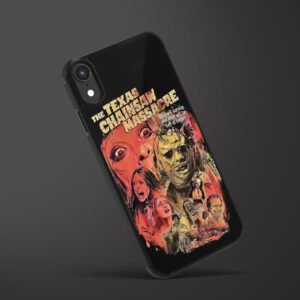
Texas Chain Saw Massacre Horror Phone Case iPhone Galaxy Google Pixel All Models D1
£14.99 -

Texas Chain Saw Massacre Horror Phone Case iPhone Galaxy Google Pixel All Models D2
£14.99 -
Texas Chain Saw Massacre Horror Phone Case iPhone Galaxy Google Pixel All Models D3
£14.99 -
Texas Chain Saw Massacre Horror Phone Case iPhone Galaxy Google Pixel All Models D4
£14.99 -
Texas Chain Saw Massacre Horror Phone Case iPhone Galaxy Google Pixel All Models D5
£14.99